Don't have time to go to the art shop? What can you get from your every day supermarket/ grocery store, newsagency or shops that you regularly visit that you can use as tools? Many of you are probably already using these or have heard of the techniques described, but I thought I'd collect a 'shopping list' of supplies!
Of course you are not going to find artist quality paints, or sable paint brushes, but there are plenty of things that you can add to your artist toolbox that are cheap, available from general shops, and can extend out your toolset or allow you to experiment, particularly if you don't have time (or money) to visit the art shop.
Showing posts with label creativity. Show all posts
Sunday, 14 March 2010
Art supplies for the part time painter (EMG Zine November)
Labels:
creativity,
experimentation,
organisation,
recycling,
saving money
Monday, 1 June 2009
Jack of All Trades (EMG Zine April)
There's an old saying about being a jack of all trades and a master of none. While this saying is often about someone who never perfects anything, but rather can do lots of things adequately, from an artistic point of view there are many reasons why you may want to be a little more adaptable and flexible when it comes to subject matter and style.
So which is best? Being a specialist with a particular artistic bent, or being a generalist who can do lots of things, but doesn't specialise in any one thing? Here are some thoughts on the matter:
- "I never ever get bored with painting pink fairies with monarch butterfly wings".
Being a specialist can be boring. If you have to paint the same thing, the same colour scheme, the same style ALL THE TIME, life can get a bit dull. Of course, if you are passionate about your speciality then it can be a never-ending exploration of something you adore. Kind of like chocolate or trashy romances. Some people could live their lives never eating another kind of sweet, or read anything else and that's ok. - "Hey, aren't you that girl who paints the weird dancing turnips?"
Is that really how you want people to remember you? And is that really what you want to get commissions for, for the rest of your life? As a specialist you can be pigeonholed. You can be defined by a particular moment in time -- much the same way an actor gets typecast. If you love dancing vegetables, then great, you won't have a problem, but if you don't, it can be very hard to escape from people's expectations. - "Who are you again?"
If you don't specialise, you can get lost in the crowd. Imagine yourself a bird of paradise amongst a bunch of pigeons -- You want and need to be noticed. Being memorable (for good reasons) is a way to build a fan base and get sales/ work.
If you have many different skills and subjects that you can paint (competently), you open yourself to a greater variety of projects. - "Why don't you ask her? She's the queen of painting purple unicorns!”
Being a master in a particular field immediately makes you an expert whose advice is sought. This can be good and bad -- depends on if you are happy to answer questions, or even defend your position as an expert. There are a number of digital artists that are expert painters that essentially have to provide work in progress shots to 'prove' their method. - "I have no brand!"
Having many skills and doing many themes can make it difficult to 'brand' yourself. How do you want yourself to be known if you don't have something that stands out as representing 'you the artist'? As a specialist, your speciality is your 'brand'. - "How dare you paint a space monkey? You're supposed to paint mermaids!"
If you are a specialist, you can have violent reactions from fans when you don't paint what they expect. You'd be amazed at comments from so called fans when you change your style or your media. It doesn't matter what the reasons are, if you have a fan base for a particular reason, you do something different and you are bound to tick someone off!
Sometimes specialisation only has a small fan base. You may be brilliant at what you do, but if there are only three people in the world who love your stuff, unless they are willing to be your patrons, you may need to broaden your artistic field.
So what is the best approach? Generalist or specialist? Well, it really comes down to a few things.
- You have to paint what you love or connect with. Whether it's a style, colour or subject. Things that have meaning to you, or you enjoy painting, generally come out better than something you loathe and struggle to paint.
- Know thyself. If you love to paint the same kinds of paintings, go for it. If you get bored with the same paintbrush between one painting and the next, you might be happier doing a bit of illustration, a bit of design work, and selling products as well.
- Skills regardless of specialisation are important. Without skills, you lose credibility.Finally, people grow and change. You might specialise in one thing for ten years, and then abruptly change and do something different. And that’s ok too!
Labels:
creativity,
style
Saturday, 21 June 2008
Uses for clear post-it notes in the art studio

Ah post-it notes. I love simple office supplies that become near indispensable in the office. When I read this article http://unclutterer.com/2008/05/28/how-to-write-in-books-that-arent-yours/ I got to thinking about some of the uses that an artist could apply this simple technique too. The article talks about the using clear post-it notes for making notes in library books and text books.
The transparent post-it notes are fairly small (normally 4 x 4"), but they do stick to the page without damaging the book. This is great when you're using a library book or a magazine you don't really want to keep, or a text book you want to sell next semester! Unfortunately, these post-it notes can be somewhat difficult to find so I have some alternate techniques listed further down the page.
Uses for artists:
- Make composition notes from other paintings, photos, images
- Highlight phrases of text such as instructions in how-to books while you're working through a technique
- Highlight colours from lists of paints that you need to buy
- Try alternate compositions/ costumes/ expressions
Alternate solutions:
- Attach with blue tac a small sheet of the following
- Baking paper/ greaseproof paper (though you may need to use a Sharpie pen with this)
- Tracing paper/ velum and pencil
- Clear acetate and a whiteboard marker/ Overhead projector marker. This is only a temporary solution as eventually it will wipe off. Plus Acetate can be expensive!
- Photocopy the image and draw directly on the photocopy. Use white-out/ correction fluid and coloured pens/ highlighters to explore different ideas
- Take a snapshot/ scan of the image and transfer to the computer. Create a 'trace' layer in your photo editing software and go mad!
- Use software such as http://www.qipit.com to "Copy documents, whiteboards and handwritten notes with your camera phone or digital camera to store, fax, email or publish!" (From the site)
Labels:
creativity,
experimentation,
tools
Saturday, 17 May 2008
Creatively Diverse: Costume & Garb making
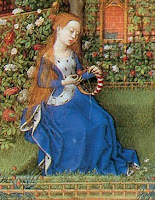
The last few months have been fairly quiet on the art front. I haven't disappeared completely, but the painting has definitely been on the back burner as I work 9-15hour days in the day job. But despite of a lack of interest in painting (i.e. I'm not painting every spare minute), I've discovered some new creative outlets that are helping to re-invigorate my love of art.Each week I trundle off to my SCA - Society for Creative Anachronism meetings (a medieval recreation group) , where we learn about life in the past. We explore how people lived during the medieval to 1600 AD time period, learning about weaponry and fighting, clothing, arts, sciences, history and a host of related skills. One of the skills I have been learning is clothes making (we don't do costuming - we make clothes). Now I am a little domestically challenged - probably more from laziness than any real lack of co-ordination, but medieval tailoring can be as simple or as complex as you make it.
So what can you learn from costume/ garb/ clothes making and how does this help the art?
- You have a greater understanding of costumes so when you go to paint or sketch a costume, because you know how it is constructed, you can work out how it's going to sit, look and feel. It also makes you obsess over historical paintings, looking at seams, linings and blackwork!
- You increase your dexterity. Hand-sewing and embroidery require precision, repetition and patience.
- You learn about patterns and motifs - not just costume patterns, but embroidery patterns, fabric patterns, printing blocks, culture and time period specific motifs, colour symbology and a great range of visual references that you can incorporate into your art
- Costumes can be used for reference shoots (maybe you can claim them as business expenses)
- Hand sewing/ embroidery/ knitting can be very soothing tasks (when you're not having to unpick!) So you have an added bonus of relaxation
- Sewing groups can give you social opportunities. It's fun to sit with a group of ladies (and men on occasion) and chat about anything and everything while being creative
- You get exposed to some magnificent artwork as you go trawling through reference sites on particular time periods and clothing pieces
- You learn about natural dyes and pigments that can also be used for painting
- it's still using your creative muscles
- it gives you a sense of accomplishment wearing something you've created
Labels:
artist block,
creativity
Subscribe to:
Posts (Atom)

